Color, Costume + Cognitive Drift
Another modernized Theory on Why So Many People ‘Remember’ Sinbad as a Genie, Yes it's Mandela...But the story Gets deeper.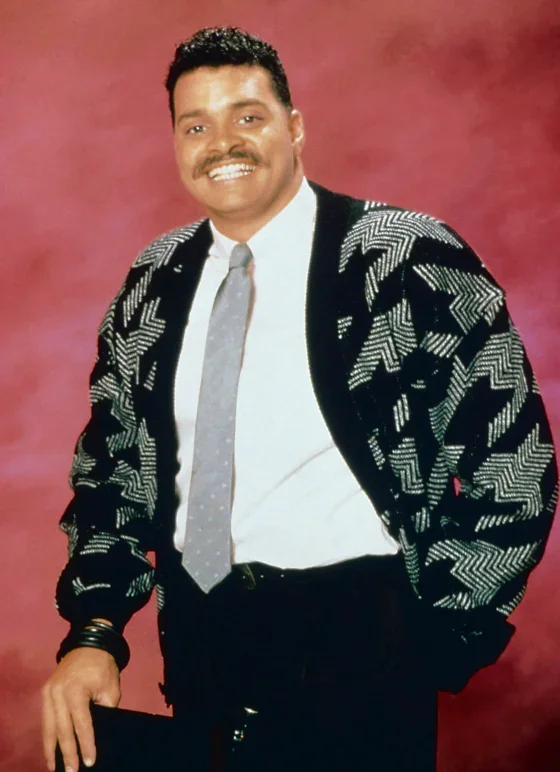
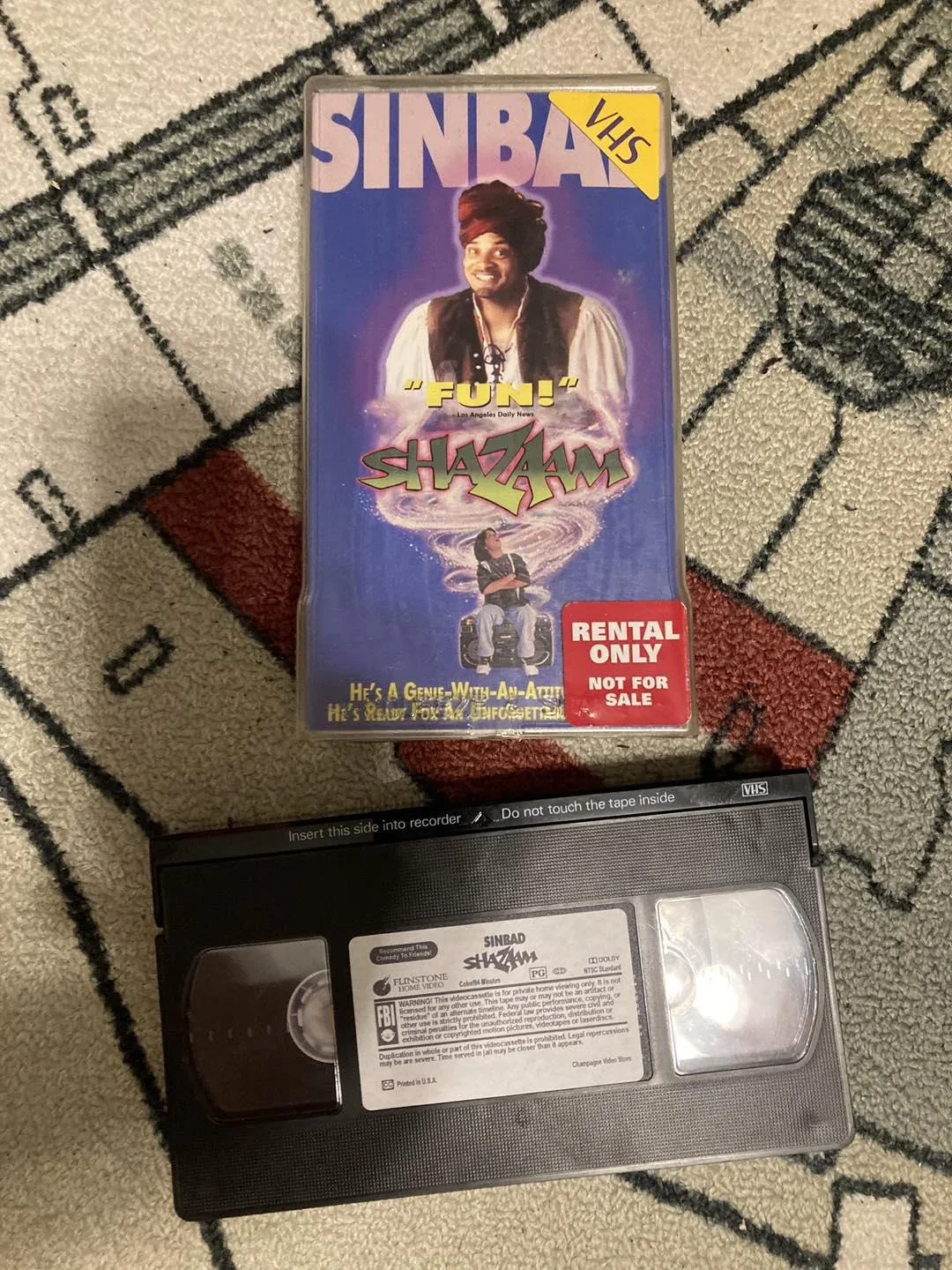
_The so-called “Sinbad genie movie” is one of the most persistent examples of the Mandela Effect. Thousands of people confidently remember a 1990s film called Shazaam starring Sinbad as a wisecracking genie, despite the fact that no such film was ever produced. What makes this case especially fascinating is not simply that people are wrong — it is how specifically wrong they are. The Sinbad case becomes particularly interesting when viewed through the lens of visual cognition and color psychology.
_Our theory is that the vivid color architecture associated with Sinbad’s public persona during the 1990s played a major role in constructing and stabilizing the false memory in people’s minds. More specifically, highly saturated costume imagery, combined with schema-driven memory reconstruction and media overlap from the era, likely created an unusually “sticky” cognitive fusion between Sinbad and existing genie tropes. In other words: people may remember it because their brains assembled it from emotionally and visually compatible fragments already stored in memory. On the flip-side its far easier, logically, to explain how not remembering a nonexistent movie is simply because it never actually existed.
_Research on false memory strongly supports the idea that memory is reconstructive rather than reproductive. Humans do not replay memories like videos; we rebuild them from associations, expectations, emotional tone, and incomplete sensory traces. (-CC)
The Role of Color Saturation in Memory Encoding
_One underexplored aspect of the Sinbad genie phenomenon is the comedian’s highly recognizable wardrobe aesthetic during the late 1980s and early 1990s. Sinbad frequently appeared on television wearing loose-fitting, brightly colored garments with geometric patterns, gold accents, jewel tones, and flowing fabrics. The cognitive overlap matters because, if nothing else, these visual characteristics unintentionally mirror dominant Western visual shorthand for “genie” imagery and media derived from Arabian Nights-inspired fantasy.
_Color psychology research consistently shows that vivid and unusual colors increase memorability and emotional encoding. Humans are especially likely to retain imagery that combines high chromatic contrast, exaggerated sillhouettes, and cullturally recognizable archetypes. It is understandable, therefore, how a brightly dressed entertainer wearing flowing fabrics activates many of the same symbolic associations as a fantasy genie costume. Over time, the brain may compress these similarities into a simplified narrative memory which aligns with schema theory in cognitive psychology.
“People tend to fill in missing details with what feels contextually appropriate.”
_If someone remembers or encodes a ‘memory dataset’ like: (Sinbad)(Colorful Robes)(1990’s Children’s Entertainment)(Magical Comedy Aesthetics)(Real 1996 genie film "Kazaam" starring Shaquille O'Neal)…Their brain may unconsciously merge those components into a coherent but false composite memory. Its important to note that this process is not random confusion, it is organic pattern completion inherent in human perception evolved from days as hunters and prey. Why Sinbad though? Specifically? The false memory rarely attaches itself to actors like Tom Hanks or Robin Williams, despite both appearing in fantasy-oriented films during the same period. That suggests the effect depends on more than generic nostalgia. Sinbad’s visual identity carried several psychologically important cues:
1. Stage Name Association » The name “Sinbad” already invokes the namesake of a mythical sailor from Middle Eastern folklore. This semantic priming alone nudges the brain toward fantastic association.
2. Costume Similarity » His wardrobe often visually resembled stylized “sultan” or “genie” clothing common in children’s media of the era. Soft silks and well dressed styling of patterns, clashing or not, only contribute to the singular nature of his presence.
3. Other Comedic Persona Genies in Western Pop Culture » OK yeah we’re talking about Robin Williams, the comedy genius behind the genie in Aladdin (1992), who fast-talked his Genie into the hearts worldwide. Naturally, with such a broad reach, Sinbad’s performance style would be bound to overlap and fit the genie archetype.
4. Era Synchronization » The 1990s saw a surge in colorful fantasy children’s media, including TV’s Aladdin (1994), which cemented the genie aesthetic in mainstream culture. While the voice of the popular genie this time was performed by Dan Castellaneta, the comedy behind the act and the similarity to Sinbad’s work remained.
_When multiple memory pathways converge around a single symbolic archetype, the brain often favors coherence over accuracy. Without the benefit of the doubt, it’s also possible we are overcontemplating a textbook racism; misremembering one prominent black celebrity playing a genie for another prominent black celebrity being projected as a cultural ‘whoopsie’, when it only reveals the unfortunate truth of people’s perspectives. For the purpose of further discovery, however, we will focus on the scientific.
The Visual Mandela Effect and Shared Error Patterns
_Recent psychological study gives surprising credibility to the idea that certain images are intrinsically prone to generating the same false memories across different people. A 2022 study by Wilma A. Bainbridge and Deepasri Prasad demonstrated that people consistently misremember specific visual icons in nearly identical ways. Participants repeatedly recalled nonexistent visual details — such as monocles, tails, or missing design elements — with high confidence. (-SJ)
_The key finding is crucial: these memory distortions were definitevely systematic; meaning that the human brain appears predisposed to generate particular categories of visual reconstruction errors under certain conditions. The Sinbad genie phenomenon may, therefore, represent a larger category of what could be called ‘archetypal completion errors’:
• the mind encounters partial cues,
• detects a culturally familiar pattern,
• and unconsciously “finishes” the image.
_In this framework, Sinbad did not accidentally become a genie in collective memory. Using color and as a mnemonic accelerator, his public image may have been cognitively optimized for genie misattribution. ‘Highly saturated colors increase attentional salience and emotional recall strength. Research on memorability suggests that some visual stimuli possess intrinsic “stickiness” independent of attention or intention. (-arXiv)
_This could explain why the Sinbad case feels unusually real to many people compared to weaker Mandela Effect examples. Within the memory, people recall color, movement, costume texture, emotional tone, and narrative familiarity. These are the ingredients the brain uses to better determine whether or not something feels authentic. Ironically, the feeling of authenticity may become stronger precisely because the memory was reconstructed from many vivid sensory fragments rather than one fabricated source.
Collective Reinforcement and Echo Chambers
_Once online communities began discussing the nonexistent film, social reinforcement likely stabilized the false memory further. Memory researchers at the Cleveland Clinic note that repeated exposure to a claim increases perceived truthfulness through familiarity effects. That is to say, the perception of a shared recollection is powerful enough to amplify confidence in that belief. At an age where confidence through critical reasoning is being replaced by self-assurable social presence, real memory of real things is up against a behemoth of cognitive dissonance. Discussions on Reddit, for instance, repeatedly show users insisting not only that the movie existed, but that they remember specific scenes, VHS covers, or television ads. (-Reddit)
Conclusion
_The data suggests a feedback loop where vague visual memory is validated through social confirmation…leading to increased confidence…which only further elaborated the validity of the memory. Over time, the reconstructed memory becomes emotionally anchored as if it were autobiographical experience. The “Sinbad genie” Mandela Effect may not be evidence of alternate timelines or parallel realities. Instead, it may reveal something more interesting: the brain’s tendency to prioritize symbolic consistency over literal accuracy.
_Sinbad’s brightly colored wardrobe, fantasy-adjacent stage identity, and overlap with 1990s genie iconography likely created ideal conditions for memory fusion. Rather than inventing a movie from scratch, the collective mind appears to have assembled one from compatible visual and cultural fragments. In that sense, color was not merely decorative. It may have acted as a cognitive adhesive. The brain remembered the aesthetic truth of Sinbad-as-genie long before it questioned the factual truth…and now that the ‘genie is out of the bottle’ we should all be aware of the potential hazard of believing everything you read online. There are, after all, a ton of bad actors out there…its nice to remember the Sinbad was never one of them!
Sources Consulted